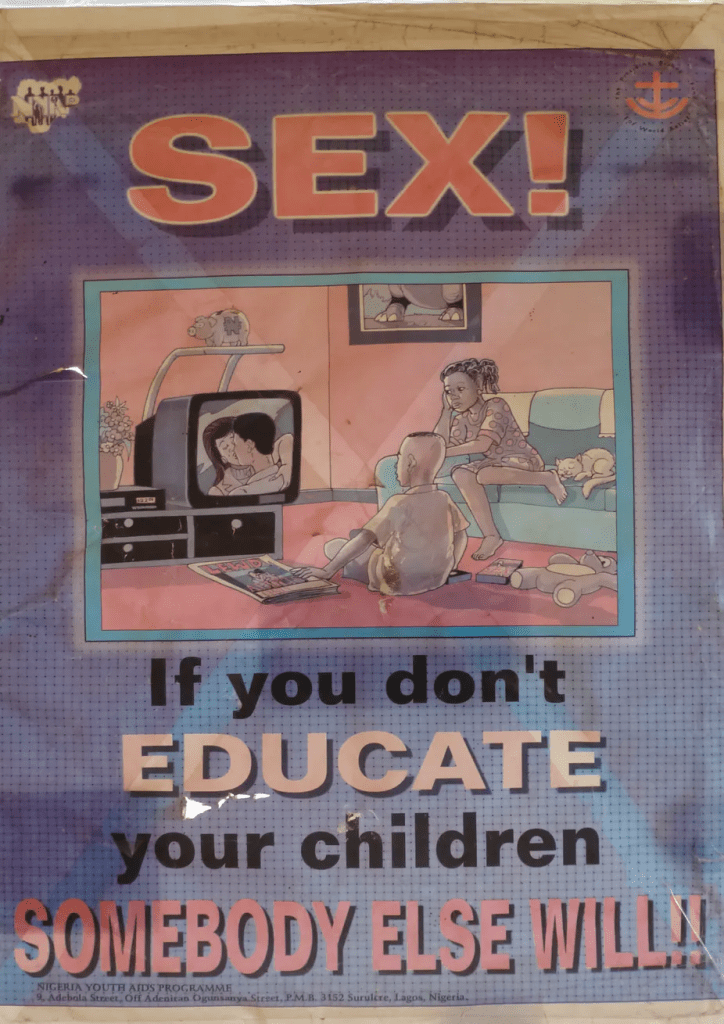
“As an adolescent, I remember one of the most important things my mum always sang into my ears was that I should avoid any physical contact with the opposite sex to avoid getting pregnant. I lived with this fallacy for a long time before I discovered it was of protecting me. Most Nigerian girls live with this mentality because they were also told by their mothers or guardian.”
In a recent conversation with TheJournal.ie, Oladapo Olajide and Mariam Briggs gave their experiences on how they got their first knowledge of sex education. Oladapo and Miriam are Nigerians currently undergoing master’s degree programme in Dublin.
In Nigeria, it is perceived that sex education will lead to promiscuity, the evidence doesn’t support the notion that sex education makes young people more sexually active. Nigerian parents cannot talk openly to their children about sexual related issues because of cultural barriers.
This is common in most Nigerian homes because it is perceived as a bad thing to education children about sex at a very young age. Sexuality education is often perceived as incompatible with prevailing traditional societies’ values and norms. In Nigeria, as in most African countries, there are many groups especially the family, including those genuinely concerned about the well-being of adolescents, who strongly oppose sexuality education as not being in the best interest of adolescents.
Most young people in Nigeria have woefully inaccurate sexuality knowledge. Researchers, sexuality educators, and several other groups working in the field of adolescent sexual and reproductive health in Nigeria consider poor sexuality knowledge to be the major reason why the triple tragedy of HIV/AIDS, unwanted teenage pregnancy, and unsafe induced abortion continues to have its highest number of victims among young people from the country.
One common and oft-given explanation why youth in Nigeria have deficient sexuality knowledge is that they primarily rely on equally uninformed and ignorant peers for their education and information on sexuality. Evidenced-based reports shows that many teenagers learn about sex and sexuality mostly from friends, the internet and television.
During the quest to sought information, two Nigerian students shared their experiences on how they got their first knowledge of sex education., we meet two Nigerian college students. One of the students, Oladapo, a male college student, age 24 tells us while he was growing up, he didn’t get his first knowledge of sex education from his parents. He recalled saying he got to see a condom the first time at the age of 14.
“when I saw the condom, I went to my father immediately and asked him the function of the object which he never said anything. I called a friend who enlightened me more about the use of a condom”
Oladapo says it was like a taboo for him and his siblings to talk about sex or any sexual related issues with their parents which is totally different from what goes on in the western world.
“As a Nigerian adolescent, there was no early form of sexual education. An average Nigerian adolescent understand the meaning of sex which they discreetly discuss among their peer-groups. They get to know sex related uses like kissing, the use of condoms from movies, shows, and internet. The only form of sex education children generally receive is in school, this is in biology classes when the topic of reproduction is taught”.
The other female student with name Miriam Briggs, 23 years old, also shared her experience on sex education as an adolescent while growing up in a Nigerian home. Miriam stated that while she was growing up her mother never talked about any sexual related topic with her. Miriam says she never knew what sex and puberty was all about until her friends enlightened her with the little, they knew about sex education.
“As an adolescent, I remember one of the most important things my mum always sang into my ears was that I should avoid any physical contact with the opposite sex to avoid getting pregnant. I lived with this fallacy for a long time before I discovered it was of protecting me. Most Nigerian girls live with this mentality because they were also told by their mothers or guardian.”
Miriam says she is acutely aware of the benefits of early and well detailed sex education for adolescents by the parents in Nigeria. “one major result of the lack of sex education in Nigerian home is that, there are terrifying increasement of young people having HIV/AIDS, unwanted teenage pregnancy, and unsafe induced abortion”.
“I’m happy that a few of Nigerian parents still share some important aspect of sexual education to their children despite the strong cultural belief which is very much relevant. This will limit or totally put an end to sexual transmitted diseases or infections, unwanted teenage pregnancy and unsafe induced abortions”.
 Fade's phonegraphy